January 10, 2026 – CLTA-SC Collaborates with GAWA to Launch “Intangible Cultural Heritage Yixing Zisha: Dialogues with the Contemporary Classroom” Teaching Translation Initiative
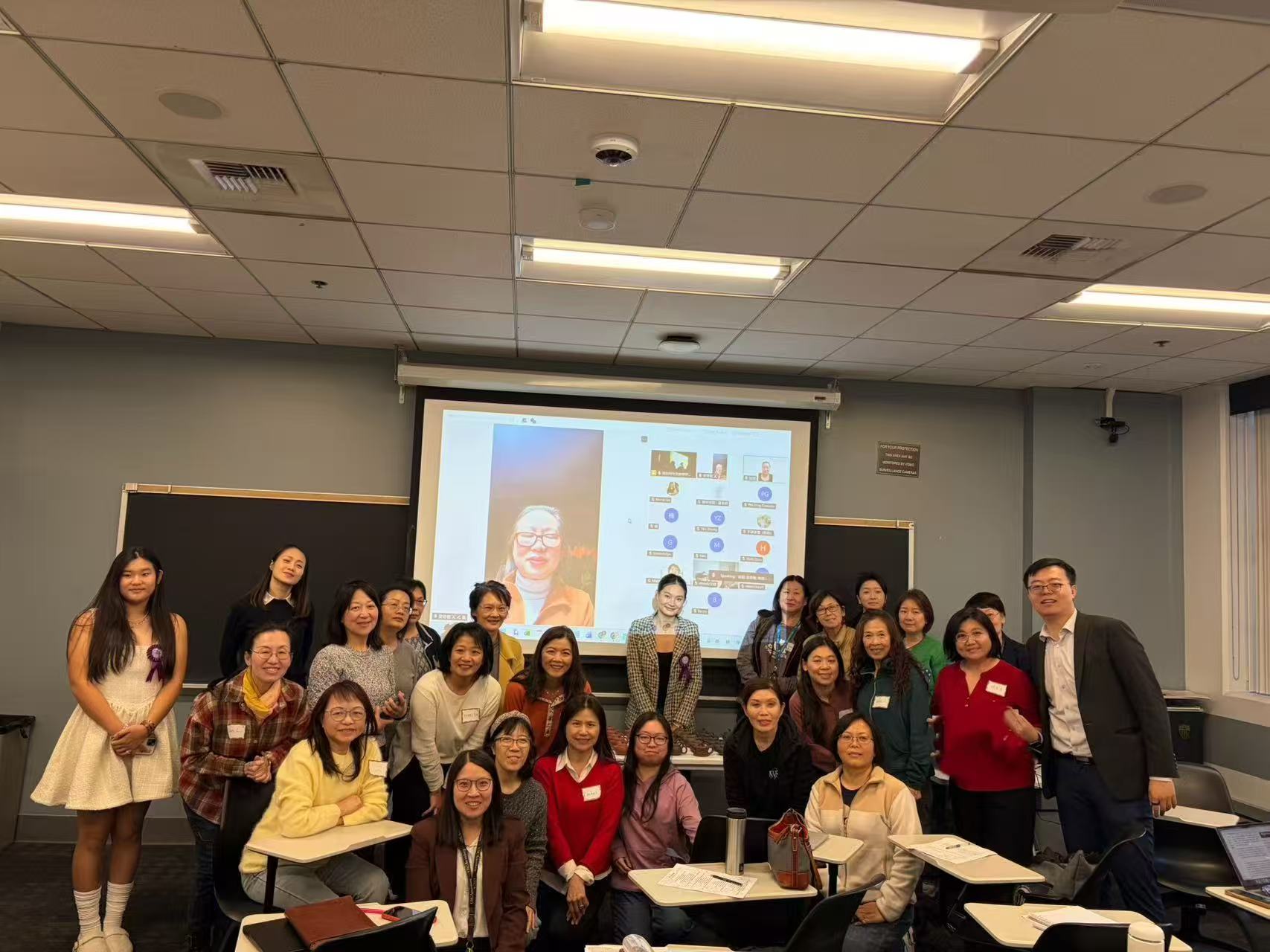
【洛杉矶讯|2026年1月10日】南加州中文教师学会(CLTA-SC)联合全球亚裔女性艺术家组织(GAWA)日前在南加州大学举办“非遗紫砂对话当代课堂”混合式教学转译活动。本次活动获得南加州大学美中学院及中文项目支持,线下吸引33位南加州中文教师到场,线上汇聚来自美国、加拿大、新加坡、泰国及中国的80余位中学与大学中文教师,共同探讨如何将宜兴紫砂这一中国非遗资源转化为课堂中可实施、可评估的教学内容。
本次活动以中国国家级非物质文化遗产——宜兴紫砂壶为核心案例,围绕其工艺体系、审美语言与文化语境展开讨论,重点回应“非遗如何进入语言课堂”“文化内容如何避免停留在介绍层面”“如何设计学生可完成、教师可评估的课堂任务”等一线教学问题。主办方表示,活动关注的不是单一文化知识的传递,而是通过真实器物与工艺逻辑,推动中文教学向体验式、实践型文化学习转变。
本次活动的特别之处在于,其合作基础源于 Esa Wang 作为创始人所建立的全球亚裔女性艺术家平台——GAWA(Global Asian Women Artists)。GAWA 致力于为全球亚裔女性艺术家搭建实现自我价值与国际传播的平台,通过系统性的推广机制,助力艺术作品实现海外输出、资源对接与引入,并推动非物质文化遗产在跨文化语境中的交流与传播。吴奇敏大师作为 GAWA 平台旗下的重要艺术家与非遗工艺代表人物,正是在 GAWA 的专业推广与策划支持下,促成了本次与教育现场的深度合作,使传统紫砂工艺得以进入更广泛的国际与当代教育视野。
在核心对话环节中,Esa Wang 与吴奇敏围绕紫砂工艺背后的文化脉络、审美体系,以及其在当代教育与国际传播中的可能性展开深入交流,搭建起艺术实践与教育现场之间的桥梁。吴奇敏通过线上连线,系统分享了紫砂工艺的历史背景与个人创作理念,并针对教师关心的课堂应用问题作出回应,探讨如何从材料选择、器型结构与工艺流程入手,引导学生进行更深入的文化理解与语言表达。
对话中,全球亚裔女性艺术家组织出品人、国际知名艺术批评家及电影文化艺术投资人 娃姐 亦参与讨论,从女性艺术家的创作特点与紫砂壶的鉴赏的角度,回答教师们的问题,为非遗进入语言课堂提供了更具结构性的分析视角。
在内容设计上,活动形成了清晰的讨论主线:一是从“器与气”的观念出发,将紫砂壶视为承载文化与情感的“有生命的器”,探讨器物、使用者与文化经验之间的关系;二是聚焦女性审美如何影响紫砂器形与工艺语言;三是解析紫砂设计中所蕴含的吉祥寓意与祝福符号,如何通过器型、题刻与纹样融入艺术创作,并进一步转化为课堂中的文化表达任务。
活动后半程进入面向课堂落地的教学共创环节。线下教师分组讨论由南加州中文教师学会会长何斌与南加州大学中文项目主任廖晓筠共同主持;线上讨论则由南加州大学美中学院项目主管夏儀芬统筹带领,确保线上线下同步推进、成果统一汇总。南加州大学美中研究所所长 Glenn Osaki 亦参与教学共创讨论,与一线中文教师就课堂转译路径与资源落地方式进行交流。与会教师按不同学段与项目类型展开实作,围绕教学目标、文化切入点与课堂实施方式进行共备,并在现场共同完成5套可直接应用于教学的课程方案,覆盖沉浸式项目、世界语言项目,以及从小学到大学不同学习阶段的课堂需求。主办方表示,基于本次活动形成的教案成果与教师协作网络,相关资源后续将在南加州多所本地学校推广与共享,预计将覆盖约48所学校,惠及超过2000名中文学习者。
活动结束时,每位线下到场教师获赠一把来自宜兴的紫砂壶,用于后续课堂展示与教学实践,进一步支持非遗内容在真实课堂中的持续应用。
主办方表示,此次活动是全球亚裔女性艺术家组织在南加州推动非遗与教育跨界合作的重要实践之一。未来将继续通过与教育机构及文化组织的合作,探索非遗资源在全球课堂中的更多可能性,推动文化深度与教学实践的持续连接。
Los Angeles | January 10, 2026 — The Chinese Language Teachers Association of Southern California (CLTA-SC), in partnership with Global Asian Women Artists (GAWA), recently hosted a hybrid pedagogical translation initiative titled “Intangible Heritage Yixing Zisha in Dialogue with Contemporary Classrooms” at the University of Southern California. Supported by USC’s US–China Institute and the Chinese Language Program, the event brought together 33 Chinese language teachers in person from Southern California and more than 80 middle school and university instructors online from the United States, Canada, Singapore, Thailand, and China. Participants explored how Yixing Zisha—China’s nationally recognized intangible cultural heritage—can be translated into classroom-ready, assessable instructional content.
Centered on Yixing Zisha teapots, the program examined their craft system, aesthetic language, and cultural context, addressing front-line teaching questions such as how intangible cultural heritage can meaningfully enter language classrooms, how cultural instruction can move beyond surface-level introductions, and how to design student tasks that are both achievable and assessable. Organizers emphasized that the goal was not the transmission of isolated cultural facts, but rather a shift toward experiential and practice-based cultural learning grounded in authentic objects and craft logic.
A distinguishing feature of the initiative was its foundation in GAWA, a global platform founded by Esa Wang to support Asian women artists worldwide. GAWA is dedicated to enabling artistic self-realization and international visibility through systematic promotion, facilitating overseas outreach, resource matching, and the cross-cultural circulation of intangible cultural heritage. Master artisan Wu Qimin, a leading Zisha artist and representative of intangible heritage on the GAWA platform, played a central role in bridging traditional Zisha craftsmanship with contemporary educational contexts through GAWA’s professional curation and planning.
During the core dialogue session, Esa Wang and Wu Qimin engaged in an in-depth conversation on the cultural lineage, aesthetic systems, and contemporary educational and international potential of Zisha craftsmanship, building a bridge between artistic practice and classroom implementation. Joining remotely, Wu Qimin shared the historical background of Zisha, his personal creative philosophy, and responded to teachers’ questions about classroom application—discussing how material selection, vessel structure, and production processes can guide deeper cultural understanding and language expression.
The discussion also featured contributions from Wa Jie, producer at GAWA, internationally recognized art critic, and film and cultural arts investor. Drawing on perspectives from women artists’ creative practices and Zisha appreciation, she addressed teachers’ questions and offered a more structured analytical framework for integrating intangible heritage into language instruction.
Content design followed a clear thematic arc: first, approaching Zisha through the concept of “vessel and spirit,” viewing the teapot as a living object that carries culture and emotion and examining the relationship among object, user, and cultural experience; second, exploring how women’s aesthetics influence Zisha forms and craft language; and third, analyzing auspicious symbolism and blessings embedded in Zisha design—expressed through form, inscriptions, and patterns—and translating these elements into classroom-based cultural expression tasks.
The latter half of the program focused on collaborative curriculum co-creation aimed at classroom implementation. In-person group discussions were co-facilitated by CLTA-SC President He Bin and USC Chinese Program Director Liao Xiaojun, while online sessions were coordinated by Xia Yifen, Program Manager at USC’s US–China Institute, ensuring synchronized progress and consolidated outcomes across formats. Glenn Osaki, Director of the USC US–China Institute, also participated, engaging with teachers on pathways for pedagogical translation and resource deployment.
Teachers collaborated across grade levels and program types to conduct hands-on planning around instructional goals, cultural entry points, and classroom implementation. Together, they produced five complete, ready-to-use lesson plans applicable to immersion programs, world language programs, and classrooms spanning elementary through university levels. Organizers noted that the resulting curricula and teacher collaboration network will be shared and implemented across multiple Southern California schools, with an estimated reach of approximately 48 schools and more than 2,000 Chinese language learners.
At the conclusion of the event, each in-person participant received a Yixing Zisha teapot for classroom display and instructional use, further supporting the sustained integration of intangible heritage into authentic teaching contexts.
Organizers stated that this initiative represents one of GAWA’s key practices in advancing cross-sector collaboration between intangible heritage and education in Southern California. Looking ahead, GAWA will continue to work with educational institutions and cultural organizations to explore new possibilities for integrating intangible heritage into classrooms worldwide, fostering enduring connections between cultural depth and pedagogical practice.