December 8, 2025 – CLTA-SC December Webinar: Bringing “Kitchen Culture” into the Chinese Language Classroom
On December 8, 2025, the Chinese Language Teachers Association of Southern California (CLTA-SC) hosted its December webinar, “From Kitchen to Classroom: Chinese Language Teaching and Chinese Food Culture,” held online via Zoom. The session was moderated by Angela Liao, Director of a Chinese language program in Southern California and a member of the CLTA-SC Board, and featured Dr. Yuping Zeng, Adjunct Professor of Chinese at the University of Redlands, as the keynote speaker. The event drew approximately 85 K–16 Chinese language teachers from across the United States.
Dr. Zeng brings together experience from higher education, community college teaching, and food writing. She previously served as Food Editor for The World of Chinese magazine, has taught Chinese cuisine courses in 2018 and 2025, and is currently preparing a general-education university course on Chinese food culture scheduled for spring 2026. Her academic background in Russian literature (Ph.D. in Russian Literature), combined with her culinary and cultural expertise, has shaped a distinctive perspective on integrating food culture into language teaching.
During the webinar, Dr. Zeng organized her talk around several key strands:
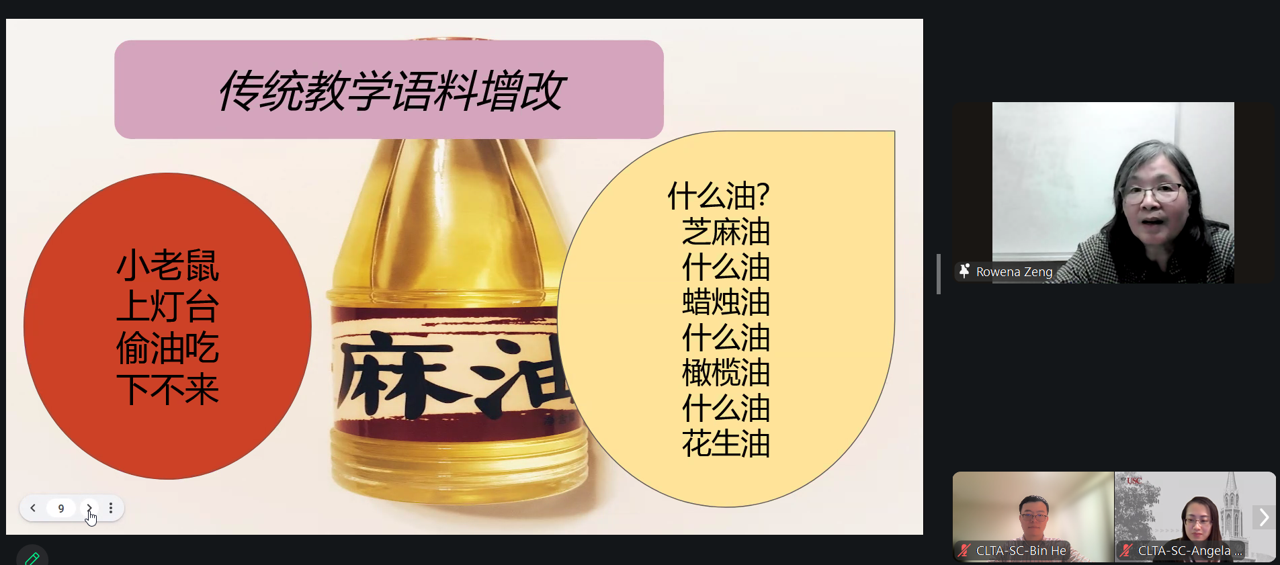
- Food-related proverbs, sayings, and everyday expressions and how they can be introduced at different proficiency levels;
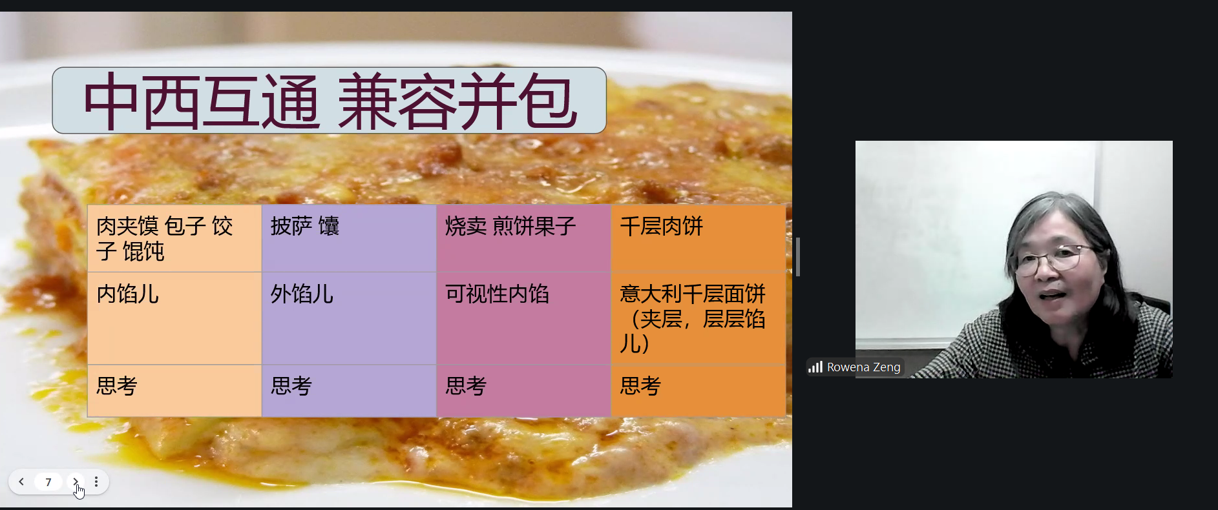
- Cultural contrasts embedded in Chinese and Western food practices and values;
- How to use recent viral videos about Chinese and Western cuisines as authentic materials and adapt them for classroom use;
- Strategies for designing integrated listening, speaking, reading, and writing tasks around authentic food-related content;
- Ways to plan food-themed activities at the unit, semester, vacation, and year-long levels.
In reflecting on her teaching practice, Dr. Zeng stressed several core principles. Teachers, she argued, do not need to be master chefs, nor do they need elaborate recipes. Instead, she recommended simplifying food preparation as much as possible and keeping the primary focus on language practice. The distinction, she noted, is between “sharing something delicious” and “running a class with a clear narrative and explicit learning goals.” She encouraged instructors to think in terms of long-term planning and to design food-related learning experiences that help students use “what we eat, how we eat, and with whom we eat” as entry points into discussions of culture, identity, and society.
For food to become a meaningful part of the curriculum, Dr. Zeng emphasized that it must ultimately feed into the four language skills: classroom activities involving eating and drinking should translate into gains in comprehension, spoken interaction, and written production. She proposed that teachers develop “cross-linguistic, cross-cultural, and cross-experiential” capacities by:
- Building intentional language frameworks for talking about food in Chinese;
- Understanding the historical, social, and identity-related meanings behind different ethnic cuisines;
- Designing tasks that give students full-cycle experiences in listening, speaking, reading, and writing around real-life food themes.
Drawing on examples from both young learners and adult students, Dr. Zeng illustrated how food can serve as a powerful vehicle not only for engagement, but also for cultivating patience, respect for time and process, and an open, inclusive attitude toward cultural diversity. By comparing short, activity-based lessons with longer project-style units, she showed how food can function as a one-day hook or as a sustained thematic thread that links multiple weeks, levels, or even future general-education courses.
The webinar offered K–16 Chinese language educators across the country concrete frameworks and classroom-ready ideas for moving truly “from kitchen to classroom”: not simply bringing food into class, but allowing food culture to shape language learning and intercultural understanding in depth. CLTA-SC will continue to develop professional development opportunities that connect language, culture, and real-world experience, supporting Chinese language teachers in building more engaging and sustainable programs.